
Bench Press Grip Guide: Width, Position, and Technique
Master your bench press grip for maximum strength and safety. Learn about grip width, thumb position, wrist angle, and how grip affects muscle activation.
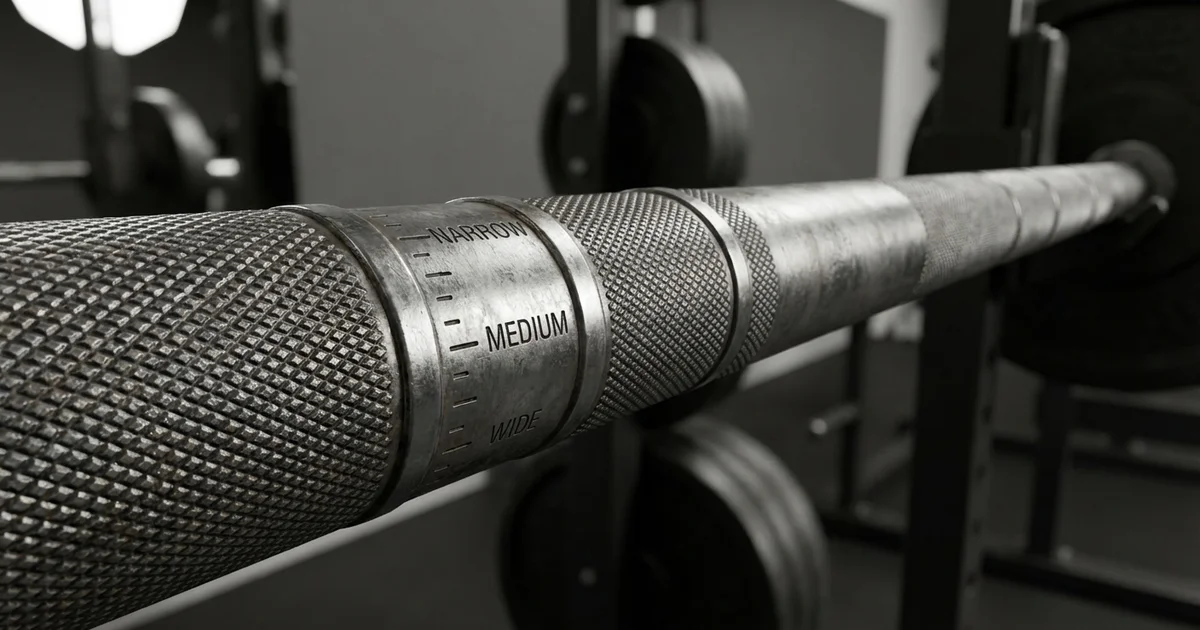
Your grip on the bar determines more than you might think. Grip width affects which muscles work hardest, grip angle impacts wrist health, and thumb position affects safety. Let's optimize every aspect.
Why Grip Matters
The grip is your connection to the bar. Poor grip leads to:
- Wasted energy fighting bar rotation
- Wrist pain and injury
- Suboptimal muscle activation
- Reduced maximum strength
A good grip creates a solid, comfortable foundation for heavy pressing.
Grip Width Options
Competition Standard (81cm Marks)
The knurling rings on an Olympic barbell are 81cm apart. This is the maximum legal grip width in powerlifting competition. For most people, this is a wide grip.
Narrow Grip (Inside Shoulders)
Hands positioned shoulder-width apart or slightly narrower.
Characteristics:
- Longest range of motion
- Maximum tricep activation
- Less chest stretch
- Generally weaker for maximum weight
- Easier on shoulders for some lifters
Best for: Tricep development, lifters with shoulder issues, close-grip bench press variation
Medium Grip (Shoulder Width + 4-6")
The sweet spot for most lifters. Hands positioned roughly 1.5x shoulder width, typically with index or middle finger on the knurling rings.
Characteristics:
- Balanced muscle activation
- Good range of motion
- Optimal for most lifters
- Best starting point for beginners
Best for: General strength, overall development, competition preparation
Wide Grip (Index on Rings or Wider)
Maximum legal width, with hands near or at the knurling rings.
Characteristics:
- Shortest range of motion
- Maximum chest activation
- Higher shoulder stress
- Potentially more weight lifted
- Requires good shoulder mobility
Best for: Maximum strength (for some lifters), chest emphasis, competition lifting
How to Find Your Optimal Grip Width
There's no universal "best" grip width. Finding yours requires experimentation.
Arm Length Considerations
- Long arms: Often benefit from wider grips to reduce ROM
- Short arms: Can go narrower without excessive ROM
- Average arms: Medium grip usually works well
Shoulder Health
If you have shoulder issues:
- Try narrower grips first
- Avoid extreme wide grips
- Pay attention to elbow angle (stay under 75°)
- Consider grip rotation (neutral grip dumbbells)
Goals (Strength vs Muscle)
- Maximum strength: Experiment with wider grips to reduce ROM
- Chest development: Medium to wide for maximum stretch
- Tricep development: Narrower grips
- Shoulder health: Whatever doesn't hurt
Testing Protocol
- Start with medium grip (index finger on rings)
- Perform 3 sets of 8 at moderate weight
- Note how it feels (strength, comfort, joint stress)
- Next session, try slightly wider (by one finger width)
- Compare over several sessions
- Settle on what feels strongest and most comfortable
Grip Angle: Straight vs Angled Wrists
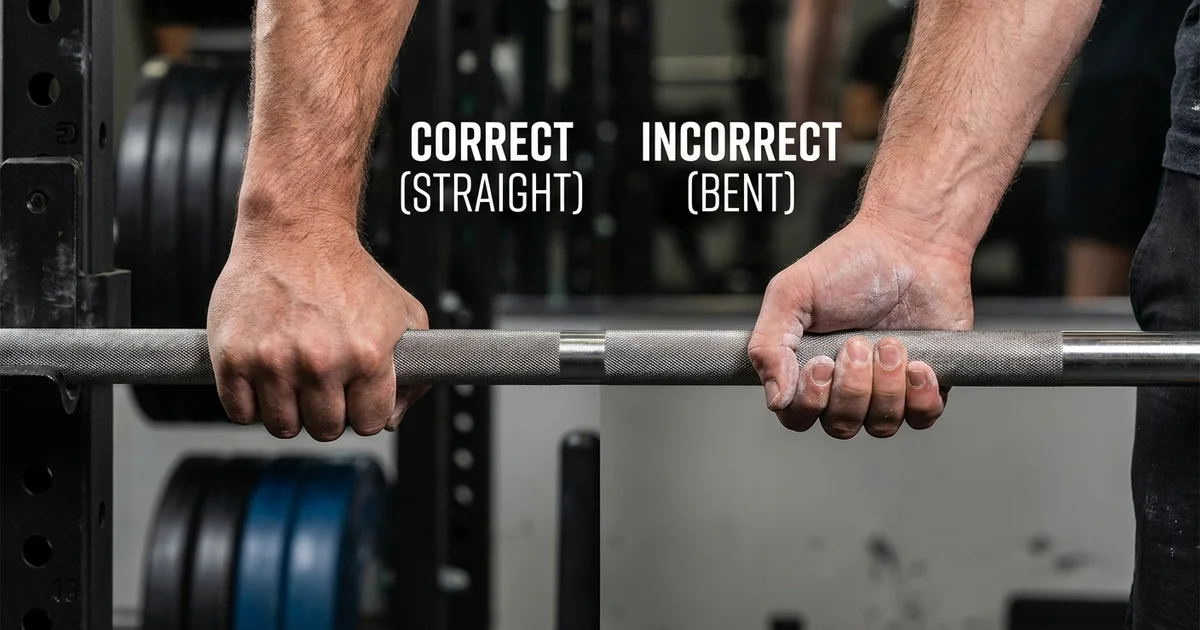
Proper Wrist Position
Your wrists should be straight, not bent backward. The bar should rest on the heel of your palm, directly over your forearm bones.
Signs of poor wrist position:
- Wrist pain during or after pressing
- Bar feels unstable
- Visible backward bend in wrist
How to Fix Bent Wrists
- Grip the bar lower in your hand - Not in your fingers, but on the fleshy heel of your palm
- Squeeze the bar hard - Creates stability
- Think "punch the ceiling" - Keeps wrists straight
- Consider wrist wraps - Provide external support
Bent wrists leak power and can cause chronic wrist pain. Fix this immediately if it's an issue.
Thumb Position: Wrapped vs Thumbless
Full Grip (Thumbs Wrapped Around)
The standard and recommended grip. Thumbs wrap around the bar opposite your fingers.
Advantages:
- Secure grip, bar cannot roll out of hands
- Full control of the bar
- Safe for heavy lifting
Disadvantages:
- Some find it less comfortable
- May create slightly bent wrists for some
Thumbless/Suicide Grip (Thumbs on Same Side as Fingers)
Also called "suicide grip" for a reason, the thumbs rest alongside the fingers instead of wrapping the bar.
Advantages:
- Some lifters find it more comfortable
- Can help keep wrists straighter
Disadvantages:
- Bar can roll out of hands and land on your face/neck
- Not allowed in many competitions
- Significantly higher injury risk
Recommendation: Use a full grip. The "comfort" advantage doesn't outweigh the safety risk. Multiple lifters have been killed by bars rolling out during thumbless grip bench press.
How Grip Affects Muscle Activation
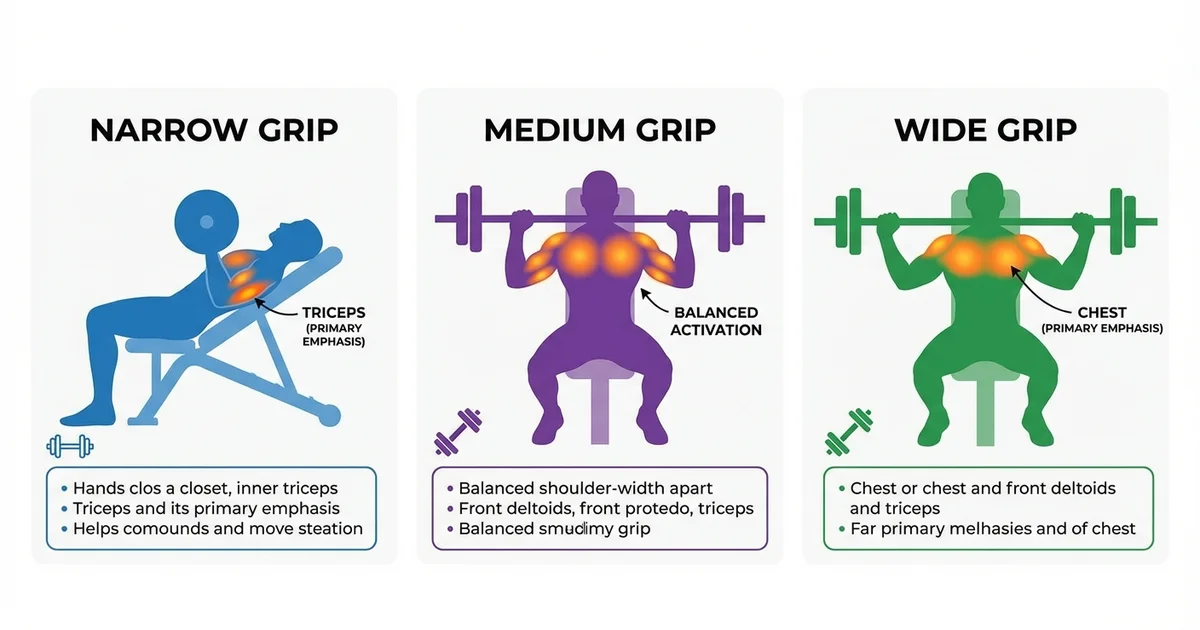
Research shows grip width significantly impacts which muscles work hardest:
| Grip Width | Chest Activation | Tricep Activation | Shoulder Activation |
|---|---|---|---|
| Narrow | Moderate | Very High | Moderate |
| Medium | High | High | Moderate |
| Wide | Very High | Moderate | Higher |
Key Findings
- Wider grips: 10-15% more chest activation
- Narrower grips: 15-20% more tricep activation
- Extreme wide grips: Increased anterior deltoid involvement
- All grips: Similar overall pressing power when technique is equal
This doesn't mean one grip is "better," it means different grips serve different purposes.
Grip-Related Injuries and Prevention
Wrist Pain
Causes:
- Bent wrists during pressing
- Grip too wide for your wrist structure
- Insufficient wrist mobility
Prevention:
- Bar on heel of palm
- Wrist wraps for support
- Wrist mobility work (flexion/extension stretches)
Elbow Pain
Causes:
- Grip too narrow (puts stress on elbow)
- Excessive close-grip work
- Elbow flare (often related to grip width)
Prevention:
- Experiment with slightly wider grip
- Limit close-grip volume
- Maintain proper elbow angle
Shoulder Pain
Causes:
- Grip too wide for your shoulder mobility
- Excessive elbow flare
- Lack of scapular retraction
Prevention:
- Narrow the grip slightly
- Keep elbows at 45-75° angle
- Retract shoulder blades
Advanced Grip Techniques
Bulldog Grip
A slight rotation of the wrist that positions the bar lower in the palm. Used by many powerlifters.
How to do it:
- Position bar low in palm (near heel)
- Rotate hands slightly outward (thumbs move toward your face)
- Close grip around bar
Benefit: More stable wrist position, better force transfer
False Grip With Safety
If you insist on a thumbless grip:
- Only use it in a power rack with safety pins
- Keep weight moderate (never near max)
- Have a spotter
- Accept the risk
Honestly, just use a full grip.
Grip Training for Bench Press
Strong grip supports strong pressing:
- Farmer's walks: Overall grip endurance
- Plate pinches: Finger strength
- Dead hangs: Grip endurance and forearm strength
- Towel pull-ups: Crushing grip strength
A stronger grip means more control over the bar and potentially more weight lifted.
Calculator for Different Grips
Different grip widths may affect your calorie burn slightly due to different ranges of motion. Track your bench press training with our Bench Press Calorie Calculator.
Related Guides
- How to Bench Press - Complete technique breakdown
- Bench Press Muscles Worked - Understand the anatomy
- Common Bench Press Mistakes - Avoid these errors
- Bench Press Variations - All the variations
- How to Increase Your Bench Press - Build more strength