
Bench Press Safety: Spotting and Solo Training Guide
Learn how to bench press safely with or without a spotter. Covers proper spotting technique, safety pin setup, the roll of shame, and when to stop a set.
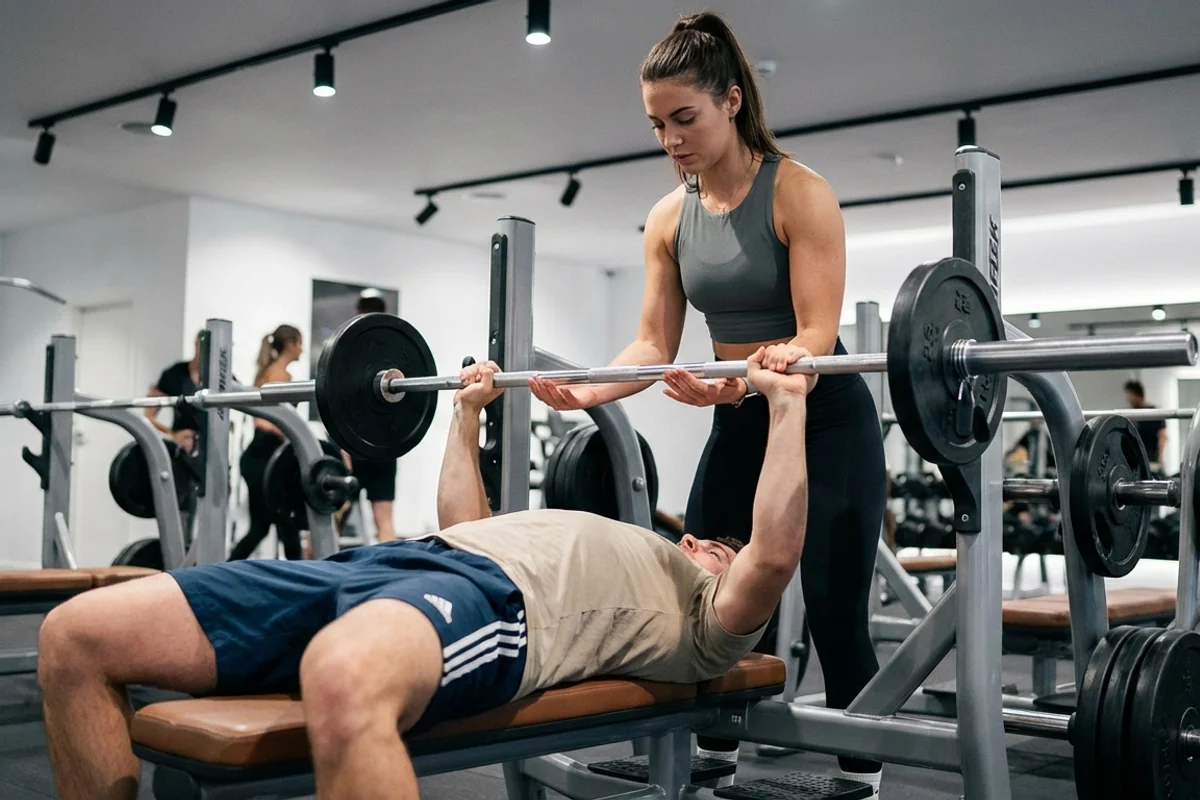
The bench press is one of the few exercises where you can get pinned under heavy weight. Understanding proper safety protocols, whether you have a spotter or not, is essential for every lifter.
Why Bench Press Safety Matters
Every year, lifters are seriously injured (and some killed) by bench press accidents. Most accidents are preventable with proper:
- Safety equipment setup
- Spotter communication
- Self-assessment of fatigue
- Emergency escape techniques
Taking safety seriously isn't about being weak, it's about training consistently for years to come.
Training WITH a Spotter
A competent spotter is the gold standard for bench press safety. Here's how to spot and be spotted correctly.
Proper Spotter Positioning
The spotter should:
- Stand directly behind the bench head - Centered behind the lifter
- Feet shoulder-width apart - Stable, athletic stance
- Slight knee bend - Ready to lift with legs
- Hands near the bar - Without touching it
- Eyes on the bar - Not checking their phone
Hand Position During the Lift
The spotter's hands should hover 1-2 inches below the bar, ready to grab it instantly if needed. Many spotters use an alternating grip (one palm up, one palm down) for maximum control.
Never grab the bar unless:
- The lifter asks for help
- The bar is moving downward when it should be going up
- The lifter is clearly struggling and losing control
Communication Signals
Before the set, establish:
- "I need a liftoff" - Help unracking the bar
- "Spot on X" - Ready after X reps
- "All yours" - No help unless asked
- "Take it" - Help needed NOW
During the set, the lifter should communicate clearly if they need assistance. Don't assume the spotter knows when to help.
When the Spotter Should Assist
Assist immediately if:
- Bar stops moving up
- Bar starts moving down during the press
- Lifter says "help" or "take it"
- Lifter's form breaks down dangerously
Don't assist if:
- Lifter is grinding slowly but making progress
- Bar is still moving up (even slowly)
- Lifter hasn't indicated they need help
Liftoff Technique
If providing a liftoff:
- Position hands on the bar (alternating grip)
- On the lifter's signal ("Up" or counting down), help lift the bar off the hooks
- Guide the bar forward until over the lifter's shoulders
- Release smoothly when the lifter says "Got it"
- Keep hands close until the lifter locks out
A good liftoff helps the lifter maintain their setup. A bad liftoff can ruin the entire set.
Training WITHOUT a Spotter
Many lifters train alone. Here's how to do it safely.
Using Safety Pins/Arms Correctly
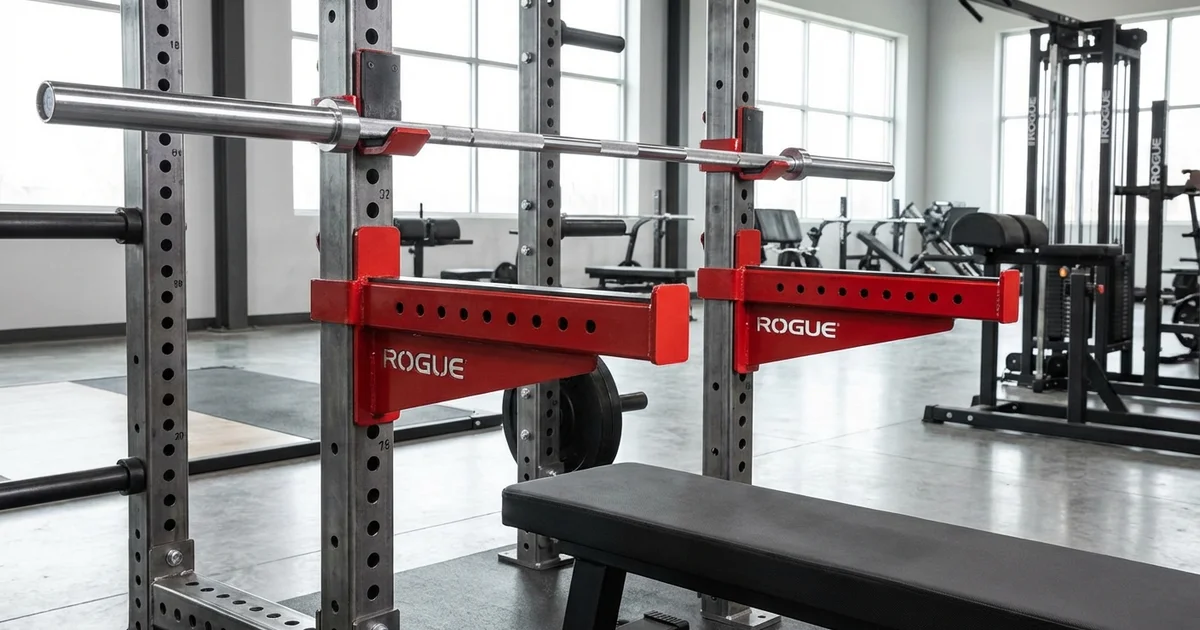
Power rack setup:
- Position the bench inside the rack
- Set safety pins just below chest level when arched
- Test by lying down and checking that the bar can touch your chest but will catch on the pins if you flatten out
- Never set pins too low, they won't help if they're at stomach level
Smith machine:
- Rotate the bar to lock it at any point
- Practice the rotation movement before heavy sets
- Set the safety catches as a backup
The "Roll of Shame" Technique
If you get stuck without safety equipment, the roll of shame is your escape:
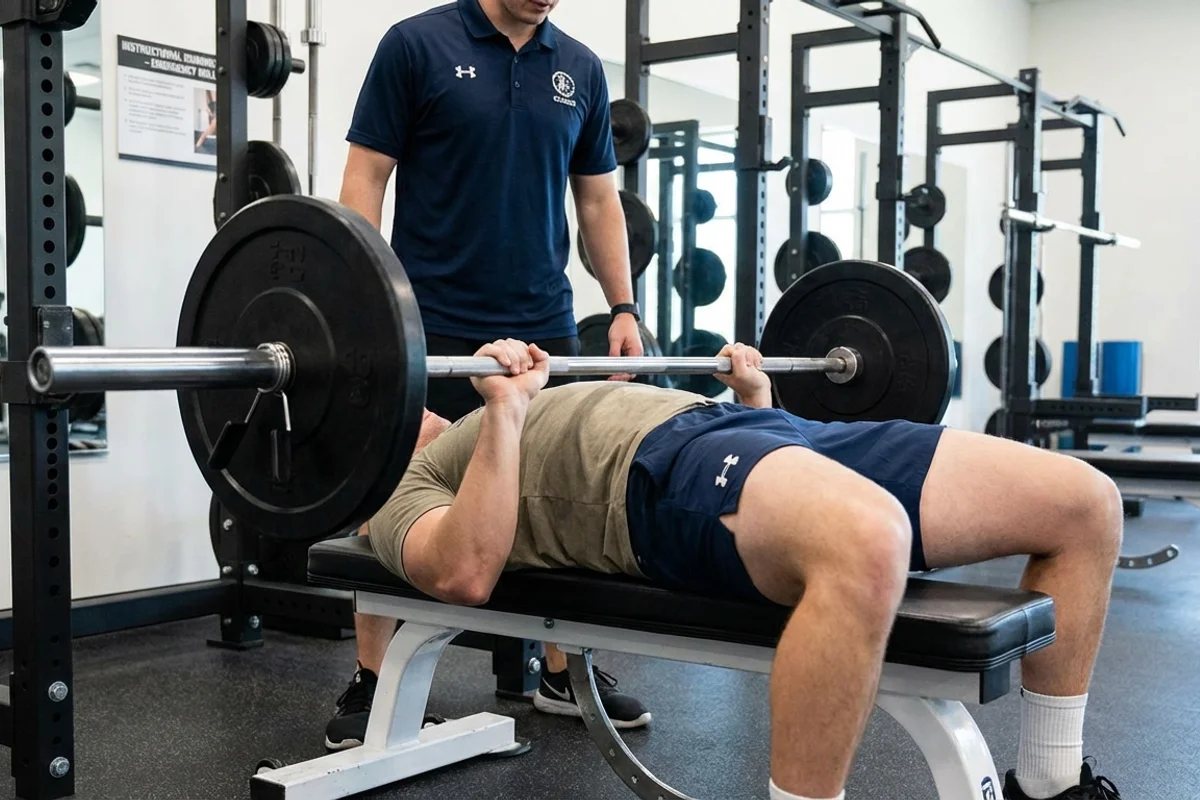
- Don't panic - You have time and options
- Lower the bar to your chest - Controlled, not crashing
- Tilt one end slightly - Let one plate slide off (this will happen quickly, so be ready)
- Roll the bar down your body - Toward your hips
- Sit up - Once bar clears your chest, sit up and get out from under it
- Or dump the other side - Once one end is empty, tip the bar to drop the remaining plates
Practice this with light weight so you know what to expect if it happens for real.
Dumbbell Alternatives
When training alone heavy, consider dumbbells instead of barbells:
- Can drop dumbbells to the sides if needed
- No chance of being pinned
- Still highly effective for building strength and muscle
When to Stop a Set
Stop the set if:
- You're unsure you can complete the next rep
- Form is breaking down significantly
- You feel pain (not just muscle fatigue)
- You're losing control of the bar path
It's better to rack the bar one rep early than to fail and potentially get hurt.
Equipment Safety Checks
Before Every Workout
Check the barbell:
- No cracks or bends
- Collar spins freely (if Olympic bar)
- Appropriate weight capacity for your lift
Check the bench:
- Stable and doesn't wobble
- Pad is secure
- Correct height for your body
Check the rack/hooks:
- J-hooks are secure
- Safety pins are in place (if applicable)
- Appropriate height settings
Proper Use of Bar Clips
Bar clips (collars) prevent plates from sliding. Use them:
- Always with a spotter - Keeps weight balanced
- Debate when alone - Some lifters prefer no clips so plates can slide off in emergency
If you have safety pins set correctly, use clips. If you don't have safety equipment, going clipless may be safer.
Red Flags to Stop Training
Stop your bench press workout if you experience:
- Sharp shoulder pain (not just muscle fatigue)
- Chest pain (non-muscular)
- Dizziness or lightheadedness
- Loss of grip strength
- Numbness or tingling in arms/hands
These may indicate injury, dehydration, or other issues requiring attention.
Safe Progressive Overload
Avoid dangerous situations by progressing intelligently:
- Add weight slowly - 5lb jumps, not 20lb
- Know your limits - Don't attempt weights you're not prepared for
- Train to technical failure - Not absolute failure when alone
- Use appropriate rep ranges - Heavy singles/doubles are riskier than moderate weights
Solo Training Decision Tree
Question: Should I attempt this lift alone?
- Do I have safety pins set correctly? → If no, consider lighter weight
- Have I lifted this weight before? → If no, use extra caution
- Am I fatigued from previous sets? → If yes, leave 1-2 reps in reserve
- Do I know the roll of shame? → If no, learn it before going heavy
Related Guides
- How to Bench Press - Perfect your technique
- Common Bench Press Mistakes - Avoid dangerous errors
- Bench Press for Beginners - Start safely
- Bench Press Calorie Calculator - Track your training