
Ironman Bike Pace Chart: Speed and Time Reference Guide
Complete Ironman bike pace chart with finish times by average speed, FTP percentage, and course difficulty. Printable reference for race day planning.
Understanding your target bike pace is crucial for Ironman success. The 180km bike leg is where most races are lost—not won. Push too hard, and you'll pay during the marathon. This comprehensive pace chart helps you find the right balance.
Understanding Ironman Bike Pace
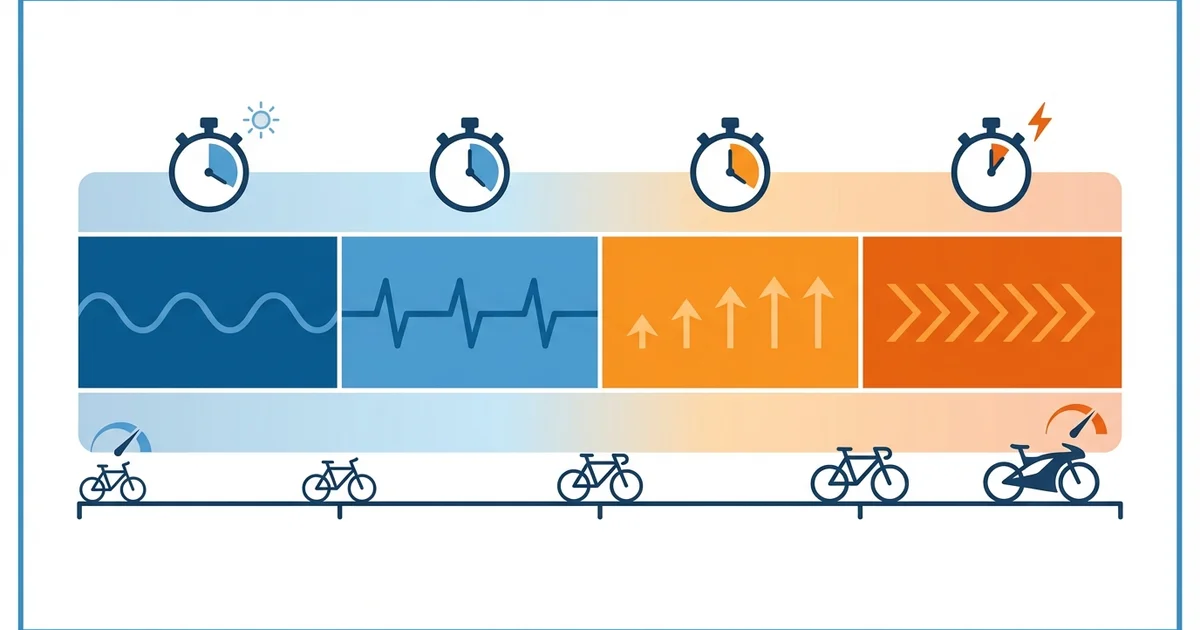
Unlike standalone cycling events, your Ironman bike split must be conservative enough to preserve your legs for 42.2km of running. The key is finding a pace that feels "too easy" in the first half but allows you to maintain consistent power throughout.
The golden rule: If you feel fast on the bike, you're probably going too hard.
Use our Ironman Bike Split Calculator to get course-specific predictions based on your GPX file, FTP, and conditions.
Ironman Bike Pace Chart by Average Speed
This table shows your expected 180km bike split based on average speed:
| Avg Speed (km/h) | Avg Speed (mph) | 180km Time | Category |
|---|---|---|---|
| 40 | 24.9 | 4:30 | Elite |
| 38 | 23.6 | 4:44 | Elite |
| 36 | 22.4 | 5:00 | Competitive AG |
| 34 | 21.1 | 5:18 | Competitive AG |
| 32 | 19.9 | 5:38 | Age Grouper |
| 30 | 18.6 | 6:00 | Age Grouper |
| 28 | 17.4 | 6:26 | Finisher |
| 26 | 16.2 | 6:55 | Finisher |
| 25 | 15.5 | 7:12 | Survival |
Important: These times assume consistent pacing. If you start too fast and fade, your overall time will be worse even if your average speed looks similar.
Pace Chart by FTP Percentage (Intensity Factor)
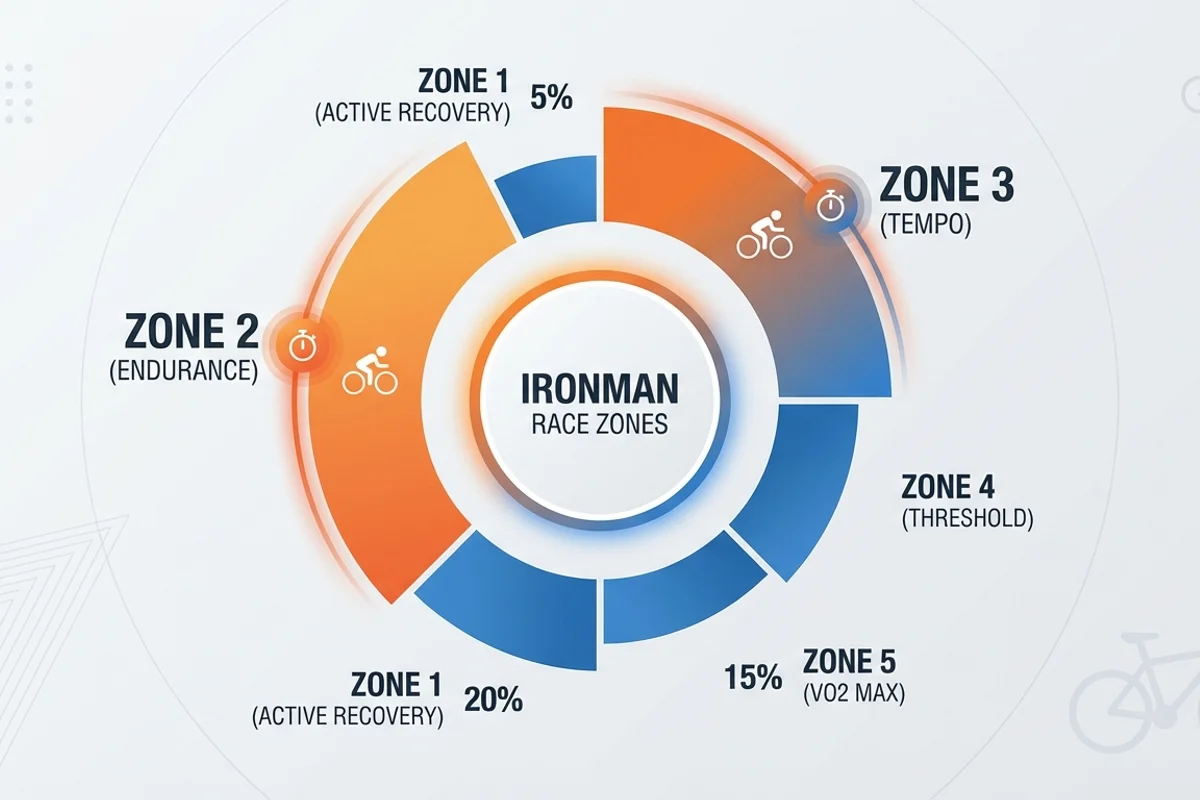
Your Intensity Factor (IF) is a better predictor of performance than speed because it accounts for your individual fitness level:
| Experience | Target IF | 200W FTP | 250W FTP | 300W FTP |
|---|---|---|---|---|
| First Ironman | 0.65-0.68 | 130-136W | 163-170W | 195-204W |
| Intermediate | 0.68-0.72 | 136-144W | 170-180W | 204-216W |
| Experienced | 0.72-0.76 | 144-152W | 180-190W | 216-228W |
| Competitive | 0.76-0.80 | 152-160W | 190-200W | 228-240W |
How to Use IF for Pacing
- Know your FTP: Use an FTP Calculator to establish your threshold
- Select your IF target: Based on experience level
- Calculate race power: FTP × IF = Target Average Power
- Stay disciplined: Don't exceed target power in the first 60km
Course Difficulty Adjustments
Course profile significantly affects your bike split. Here's how to adjust expectations:
| Course Type | Example Courses | Time Adjustment |
|---|---|---|
| Flat | Kona, Frankfurt | Baseline |
| Rolling | Cairns, Barcelona | +5-10 min |
| Hilly | Nice, Wales | +15-25 min |
| Mountainous | Austria, Lanzarote | +25-40 min |
Wind considerations:
- 15 km/h headwind: +8-15 min
- 15 km/h tailwind: -5-10 min
- Crosswind/variable: +3-8 min
How to Use This Pace Chart
Step 1: Determine Your Target Category
Based on your training and experience:
- First Ironman: Target "Finisher" pace (6:00-7:00)
- Previous finisher: Target one category faster
- Competitive AG: Target based on FTP and race history
Step 2: Calculate Your Target Speed
Use the chart to find your target average speed. Remember:
- Early segments should be 1-2 km/h slower
- Middle segments at target pace
- Final 15km slightly slower to prep for run
Step 3: Set Checkpoint Targets
Break down your 180km into checkpoints:
| Checkpoint | Target for 5:30 Bike | Target for 6:00 Bike |
|---|---|---|
| 30km | 55:00 | 60:00 |
| 60km | 1:50:00 | 2:00:00 |
| 90km | 2:45:00 | 3:00:00 |
| 120km | 3:40:00 | 4:00:00 |
| 150km | 4:35:00 | 5:00:00 |
| 180km | 5:30:00 | 6:00:00 |
Pace Chart for Popular Ironman Courses
Flat Courses (Fastest)
| Course | Typical AG Time | Key Factor |
|---|---|---|
| Ironman Frankfurt | 5:00-6:00 | Wind exposure |
| Ironman Texas | 5:00-6:00 | Heat/humidity |
| Ironman Florida | 5:00-6:00 | Flat but windy |
Rolling Courses
| Course | Typical AG Time | Key Factor |
|---|---|---|
| Ironman Barcelona | 5:15-6:15 | Coastal winds |
| Ironman Cairns | 5:15-6:15 | Undulating terrain |
| Ironman Copenhagen | 5:10-6:10 | Variable weather |
Hilly Courses (Slower)
| Course | Typical AG Time | Key Factor |
|---|---|---|
| Ironman Nice | 5:30-6:45 | Significant climbing |
| Ironman Wales | 5:45-7:00 | Technical + climbing |
| Ironman Austria | 5:30-6:45 | Alpine climbs |
Common Pacing Mistakes to Avoid
Starting Too Fast
The first 30km should feel embarrassingly easy. If you're passing people, you're probably going too hard. Those same people will pass you on the run.
Chasing Other Athletes
Race YOUR plan, not theirs. Someone passing you at 80% FTP might be headed for a DNF while you're executing a smart race.
Ignoring Course Profile
A 30 km/h average on a hilly course requires more effort than the same speed on a flat course. Adjust your power, not your speed, for terrain.
Not Accounting for Heat
Heat increases physiological strain. Drop your IF target by 0.02-0.03 in hot conditions (>28°C).
Related Tools and Guides
Calculators
- Ironman Bike Split Calculator - Upload your course GPX for precise predictions
- FTP Calculator - Establish your threshold power
- Ironman Time Calculator - Estimate your total finish time
Guides
- Ironman Pacing Strategy - Complete race execution guide
- Ironman Bike Training Guide - How to prepare for 180km
- Triathlon Bike Pacing - General triathlon bike strategy