
Incline Treadmill Muscles Worked: Complete Anatomy Guide
Discover exactly which muscles incline treadmill walking works. Learn why the 12-3-30 workout is so effective for glutes, hamstrings, and calves.
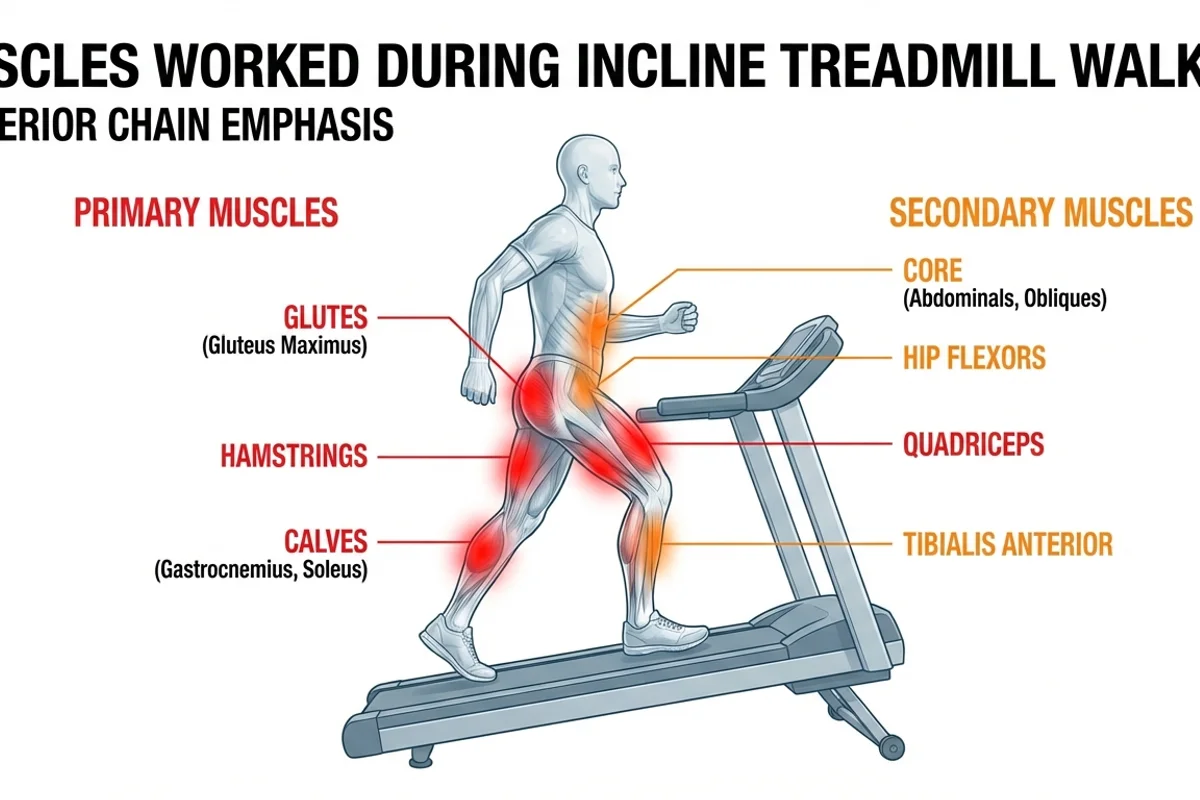
Incline treadmill walking has exploded in popularity, especially the "12-3-30" workout. Understanding the muscle activation explains why this low-impact exercise delivers such impressive lower body toning results.
Quick Answer: What Muscles Does Incline Treadmill Work?
Primary Muscles (Maximum Activation):
- Glutes (gluteus maximus)
- Hamstrings
- Calves (gastrocnemius and soleus)
Secondary Muscles:
- Quadriceps
- Core muscles
- Hip flexors
Key Difference: Incline walking activates glutes 30-50% MORE than flat walking.
The 12-3-30 Workout Explained
12 = 12% incline 3 = 3.0 mph (4.8 kph) 30 = 30 minutes
This viral workout specifically targets the posterior chain muscles.
Primary Muscles in Detail
Glutes
The star of incline walking:
- Gluteus maximus (primary hip extensor)
- Gluteus medius (stability)
- Gluteus minimus (stability)
Why incline activates glutes more: Each step requires greater hip extension against gravity. The steeper the incline, the harder your glutes must work.
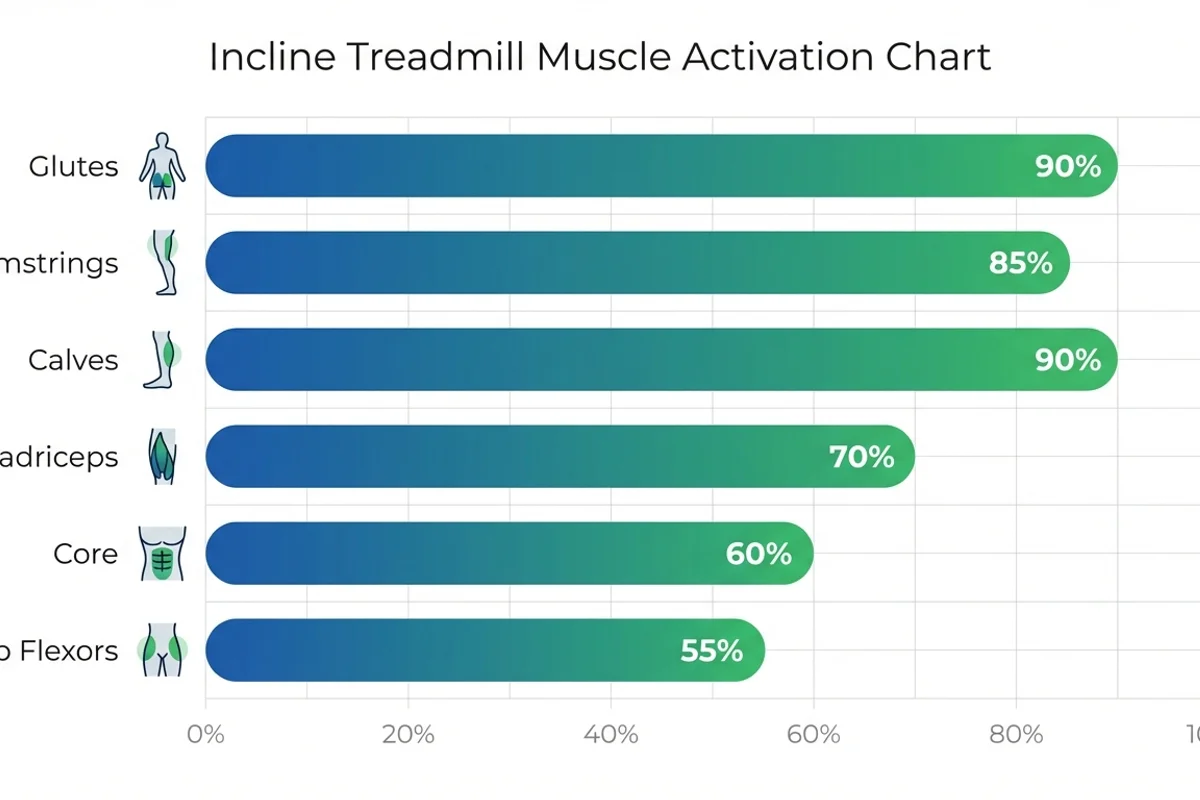
Activation at 12-15% incline: Maximum (90%)
Hamstrings
Your hamstrings work hard on incline:
- Biceps femoris
- Semitendinosus
- Semimembranosus
Why incline works hamstrings: The backward and upward movement against gravity increases hamstring demand.
Activation at 12-15% incline: Very High (85%)
Calves
Incline dramatically increases calf work:
- Gastrocnemius (push-off)
- Soleus (endurance)
Why incline works calves: Each step requires more plantar flexion (pointing toes) to push up the incline.
Activation at 12-15% incline: Maximum (90%)
Quadriceps
Quads still work but are relatively less dominant:
- All four quad muscles engage
- Less emphasis than flat walking
Activation at 12-15% incline: High (70%)
Muscle Activation by Incline Level
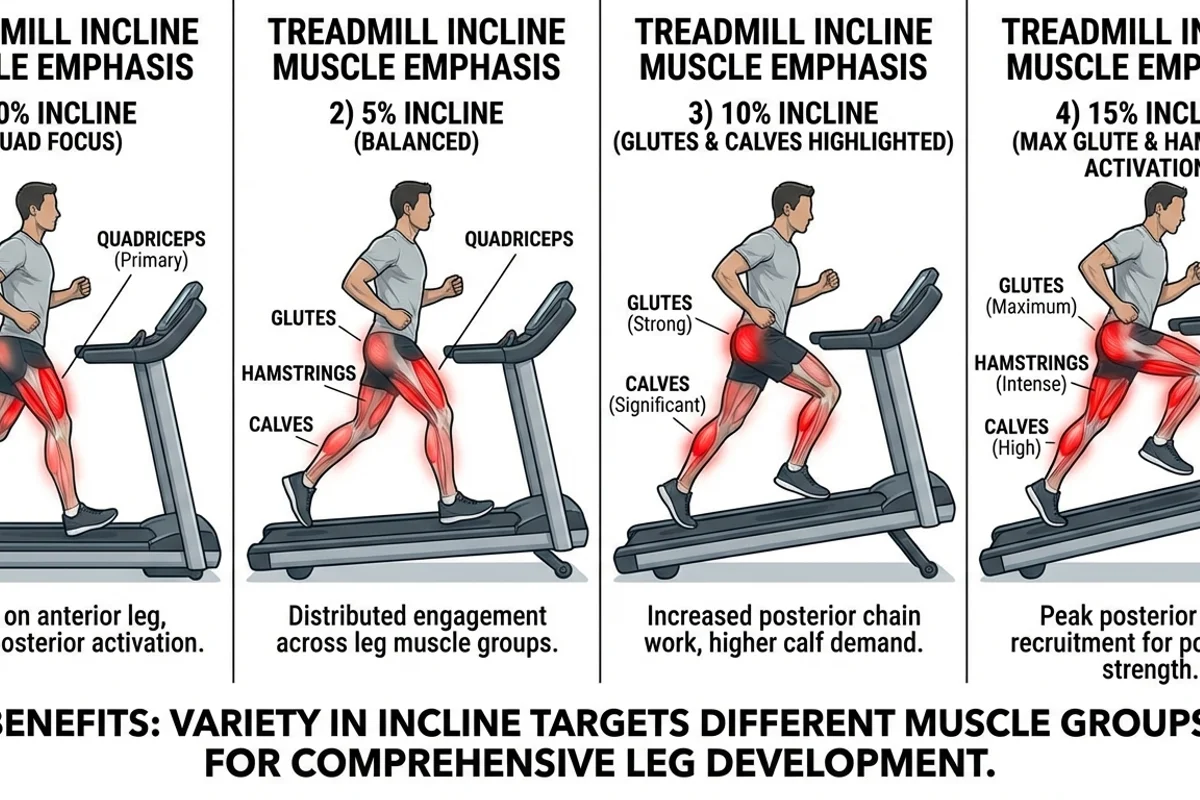
| Incline | Glutes | Hamstrings | Calves | Quads |
|---|---|---|---|---|
| 0% | ●●○○○ | ●●○○○ | ●●○○○ | ●●●○○ |
| 5% | ●●●○○ | ●●●○○ | ●●●○○ | ●●●○○ |
| 10% | ●●●●○ | ●●●●○ | ●●●●○ | ●●●○○ |
| 12% | ●●●●● | ●●●●○ | ●●●●● | ●●●○○ |
| 15% | ●●●●● | ●●●●● | ●●●●● | ●●●●○ |
How to Maximize Muscle Activation
Maximum Glute Activation
- Use 10-15% incline
- Focus on pushing through heels
- Take longer strides
- Don't hold handrails
- Squeeze glutes at top of each step
Maximum Hamstring Activation
- Use 12%+ incline
- Focus on pulling leg back
- Maintain upright posture
- Avoid leaning forward
- Control the eccentric phase
Maximum Calf Activation
- Use steep incline (10%+)
- Push through balls of feet
- Full ankle extension
- Moderate speed
- Don't rush steps
Maximum Core Activation
- Let go of handrails
- Maintain tall posture
- Engage abs throughout
- Use arm swing
- Avoid leaning on console
Why Not Hold the Handrails?
Holding handrails significantly reduces muscle activation:
| Muscle Group | Without Rails | With Rails | Difference |
|---|---|---|---|
| Glutes | 90% | 60% | -33% |
| Hamstrings | 85% | 55% | -35% |
| Calves | 90% | 70% | -22% |
| Core | 60% | 25% | -58% |
Recommendation: Light fingertip touch only for balance if needed.
Incline Walking vs. Running
| Factor | Incline Walking | Flat Running |
|---|---|---|
| Glute Activation | ●●●●● | ●●●●○ |
| Calorie Burn | ●●●●○ | ●●●●● |
| Impact | None | High |
| Sustainability | High | Lower |
| Knee Stress | Low | High |
Key insight: Incline walking can achieve similar glute activation to running with much lower impact.
Common Mistakes and Fixes
Holding Handrails Tightly
Problem: Reduces calorie burn by 20-40%, decreases muscle activation Fix: Let go completely or light fingertip touch
Leaning Forward
Problem: Reduces glute activation, strains lower back Fix: Stay upright, slight forward lean from ankles only
Walking Too Fast
Problem: Reduces control, may need to hold rails Fix: Keep speed where you can walk without holding
Ignoring Form
Problem: Reduces effectiveness Fix: Focus on heel-toe roll, full hip extension
The Science Behind Incline Training
Research findings:
- 12% incline increases glute activation by 30-50% vs flat
- Incline walking at 3mph burns similar calories to running at 5mph
- No impact stress on joints
- Improves cardiovascular fitness as effectively as running
- Can be sustained for longer durations than running
Sample Incline Workouts
Beginner: 10-3-20
- 10% incline
- 3.0 mph
- 20 minutes
- Focus on form
Intermediate: 12-3-30
- 12% incline
- 3.0 mph
- 30 minutes
- The classic workout
Advanced: Pyramid Intervals
- 5 min at 5% incline
- 5 min at 10% incline
- 10 min at 15% incline
- 5 min at 10% incline
- 5 min at 5% incline
Calculate Your Incline Calories
Track your workout intensity with our Incline Treadmill Calorie Calculator for accurate estimates.
Related Guides
- Treadmill Muscles Worked - Full treadmill guide
- Does StairMaster Build Glutes? - Alternative glute workout
- StairMaster Muscles Worked - Compare machines
- Walking Calorie Calculator - Track walking burns