
Treadmill Safety Guide: Prevent Injuries and Train Safely
Essential treadmill safety tips to prevent injuries. Learn proper equipment checks, safe operation, emergency procedures, and guidelines for different users.
Treadmills are among the safest exercise equipment when used properly, but they can cause serious injuries when safety precautions are ignored. This guide covers everything you need to know to train safely.
Treadmill Safety Statistics
Understanding the risks helps emphasize why safety matters:
- Over 24,000 treadmill-related injuries are treated in US emergency rooms annually
- Most injuries are preventable with proper safety practices
- Common injuries include falls, friction burns, and impact injuries
- Children are at particularly high risk around home treadmills
The good news: Following safety guidelines dramatically reduces your risk.
Before You Start: Pre-Workout Safety Check
Equipment Inspection Checklist
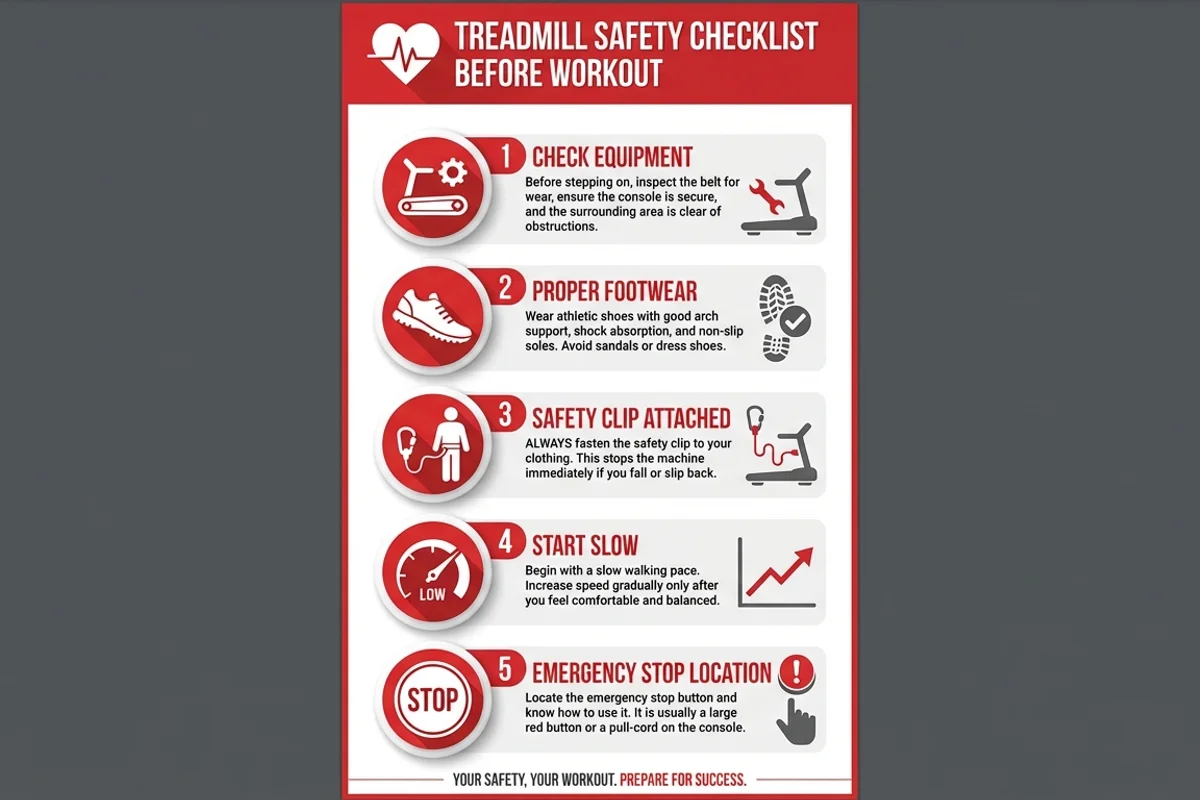
Before every workout, quickly check:
- Belt condition: No fraying, tears, or excessive wear
- Belt alignment: Belt runs centered, not drifting to one side
- Handrails: Secure and not wobbling
- Safety clip: Present and functional
- Emergency stop: Red button visible and accessible
- Power cord: No damage, properly plugged in
- Area around treadmill: Clear of objects, pets, and children
Proper Setup and Placement
If you're using a home treadmill:
- Position at least 2 feet from walls on all sides
- Ensure 6+ feet of clearance behind (fall zone)
- Place on a flat, stable surface
- Keep away from windows and stairs
- Ensure adequate ventilation
Clothing and Footwear Safety
Wear:
- Proper athletic shoes with non-slip soles
- Fitted, non-loose clothing
- Moisture-wicking fabrics
Avoid:
- Loose pants that could catch in belt
- Flip-flops, sandals, or bare feet
- Long shoelaces (tuck or double-knot)
- Jewelry that could catch
Safe Operation
Starting Correctly
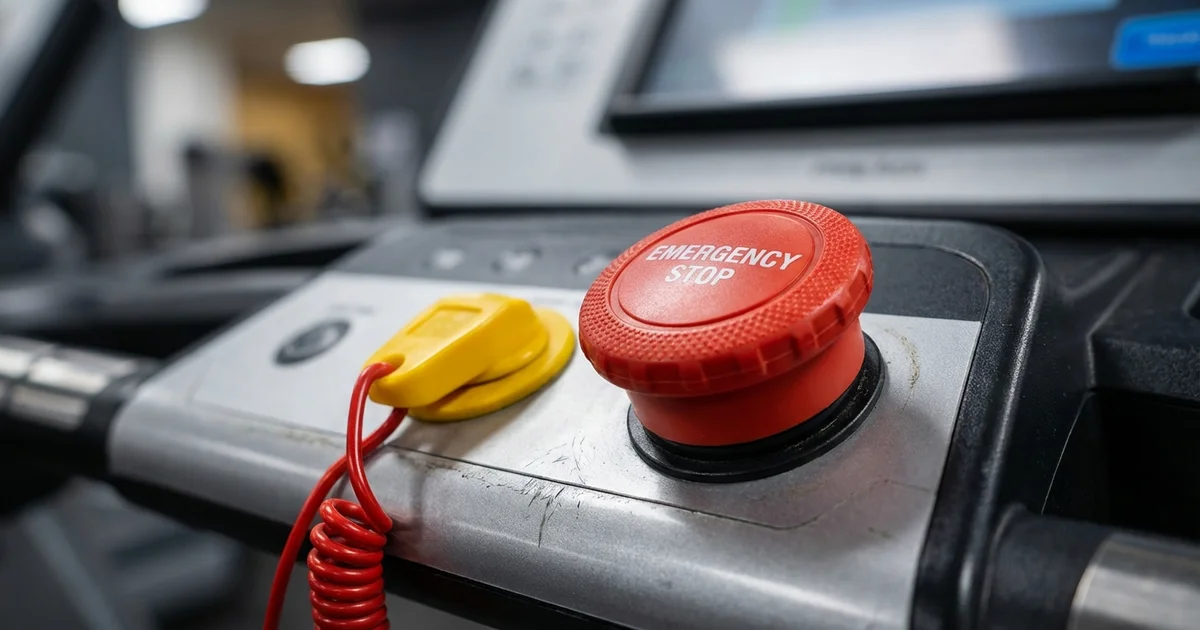
- Stand on side rails first (never on a moving belt)
- Attach the safety clip to your waistband or shirt
- Press Start while standing on side rails
- Wait for belt to begin at slow speed (0.5-1.0 mph)
- Step onto the belt one foot at a time
- Walk for 1-2 minutes before increasing speed
Speed Change Protocols
When increasing speed:
- Make small increments (0.5 mph at a time)
- Wait until comfortable before increasing again
- Don't exceed a speed you can safely maintain
- Know your "emergency bail" speed
When decreasing speed:
- Gradual reduction is safer than sudden stops
- Use the gradual stop button when possible
- Only use emergency stop if truly necessary
Incline Safety Limits
| Fitness Level | Maximum Safe Incline |
|---|---|
| Beginner | 3-5% |
| Intermediate | 6-10% |
| Advanced | 10-15% |
| Any user | Never exceed machine's rating |
Start flat and add incline gradually. High inclines change your center of gravity.
Handrail Guidelines
When to Use Handrails
Appropriate use:
- Getting on and off the treadmill
- Temporary balance recovery
- First few seconds at a new speed
- If you feel dizzy or unsteady
- During recovery intervals
Inappropriate use:
- Supporting your weight throughout the workout
- Compensating for a speed that's too fast
- Leaning heavily forward or backward
Impact on Workout Effectiveness
Holding handrails:
- Reduces calorie burn by 20-25%
- Promotes poor posture
- Can cause shoulder and wrist strain
- Indicates the speed is too high for you
Rule: If you need handrails to maintain a speed, slow down.
Heart Rate Monitoring
Safe Heart Rate Zones
| Age | Maximum HR | 60% (Moderate) | 80% (Vigorous) |
|---|---|---|---|
| 20 | 200 | 120 | 160 |
| 30 | 190 | 114 | 152 |
| 40 | 180 | 108 | 144 |
| 50 | 170 | 102 | 136 |
| 60 | 160 | 96 | 128 |
| 70 | 150 | 90 | 120 |
Formula: Maximum HR ≈ 220 - your age
Warning Signs to Stop
Stop immediately if you experience:
- Chest pain or tightness
- Severe shortness of breath (beyond normal exertion)
- Dizziness or lightheadedness
- Nausea or cold sweats
- Pain in arm, jaw, or neck
- Irregular heartbeat
- Vision changes
These could indicate a cardiac event. Seek medical attention.
Common Treadmill Injuries
Falls
How they happen:
- Distraction (looking at phone, TV)
- Speed too fast for fitness level
- Losing balance at high incline
- Belt slipping or malfunctioning
- Tripping on shoelaces
Prevention:
- Start slow, increase gradually
- Stay focused on the workout
- Use safety clip always
- Keep belt properly maintained
Friction Burns
How they happen:
- Falling and skin contacting moving belt
- Touching belt with hands while moving
- Children playing near running treadmill
Prevention:
- Safety clip stops belt if you fall
- Never reach down to a moving belt
- Keep children away from operating treadmills
Impact Injuries
How they happen:
- Falling backward off the treadmill
- Hitting console or side rails
- Objects behind treadmill in fall zone
Prevention:
- Clear the area behind treadmill
- Use safety clip
- Don't exceed comfortable speeds
Safety for Specific Groups
Beginners
- Start with walking only
- Keep speeds under 3.5 mph initially
- Use handrails until comfortable
- Complete the Beginner Guide first
- Have someone nearby first few sessions
Seniors
- Medical clearance recommended
- Start with 0% incline
- Keep one hand near handrail initially
- Use emergency clip always
- Choose treadmills with large displays
- Consider lower speeds with longer duration
Those with Medical Conditions
Consult a doctor before treadmill use if you have:
- Heart disease or history of heart attack
- Uncontrolled high blood pressure
- Joint problems or recent surgery
- Balance disorders
- Diabetes (blood sugar considerations)
- Pregnancy
Home Treadmill Safety
Childproofing
Critical precautions:
- Remove safety key when not in use
- Never leave children unattended with treadmill
- Consider a room lock or treadmill cover
- Teach children that treadmills are not toys
- Position out of play areas
Statistics: Children under 10 account for a disproportionate number of serious treadmill injuries.
Maintenance Requirements
| Task | Frequency |
|---|---|
| Wipe down belt and console | After every use |
| Check belt tension | Monthly |
| Lubricate belt | Every 3-6 months |
| Check for wear | Monthly |
| Professional service | Annually |
A well-maintained treadmill is a safe treadmill.
Pet Safety
Pets can be injured by treadmills:
- Keep pets out of the room during use
- Remove safety key when not using
- Be aware of where pets are before starting
- Don't let pets "play" on treadmills
Emergency Protocols
If You Feel Faint
- Reduce speed immediately (don't just stop)
- Grab the handrails for stability
- Continue walking slowly until you feel better
- Step to side rails when safe
- Sit down and drink water
- Don't resume until fully recovered
If You Fall
- Let go and allow the safety clip to stop the belt
- Protect your head if possible
- Stay calm and assess for injury
- Get off the treadmill when safe
- Check for friction burns or other injuries
- Seek medical attention if needed
If Someone Else Falls
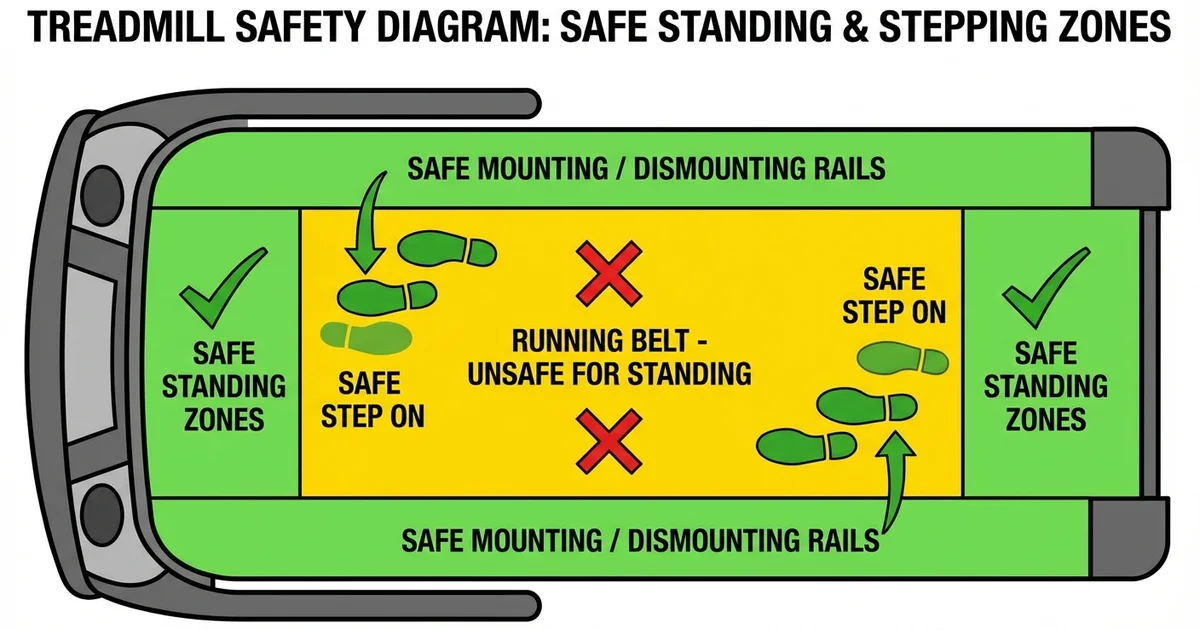
- Press the emergency stop immediately
- Don't try to catch them (you could both fall)
- Help them off the treadmill when it stops
- Check for injuries
- Call for help if injuries are serious
Quick Reference Safety Card
Print and post near your treadmill:
Before Every Workout:
- Safety clip attached
- Proper shoes on
- Area behind clear
- Start on side rails
During Workout:
- Eyes forward, not on feet
- Handrails for balance only
- Increase speed gradually
- Listen to your body
Emergency:
- Pull safety clip to stop
- Grab handrails for stability
- Step to side rails
- Sit and recover